


Introduction
My name is Rahshina Kilpatrick, and I am preparing to become an elementary classroom teacher. I am passionate about creating a classroom where students feel supported, respected, and confident in their ability to learn. As a future educator, I want my students to understand that making mistakes and experiencing challenges are normal and valuable parts of learning. I believe every student can grow as a mathematician when they are given meaningful opportunities, encouragement, and the support they need to be successful.

My Mathematics Learning Experience
Mathematics has always been a subject that came pretty easily to me. I usually understood mathematical concepts quickly and did not need a lot of repetition before I felt comfortable with a new skill. Because of this, I sometimes found myself finishing assignments before other students and having extra time in class.
One of my strongest memories of learning mathematics was during my 11th-grade year of high school. My math teacher sometimes became frustrated with me because I did not need much explanation to understand the material. There were times when I would fall asleep during class, wake up, and still be able to complete the work and ace the tests. Looking back, I realize that although I was successful academically, I was not always fully engaged in my learning. Understanding the material quickly sometimes caused me to become bored instead of looking for opportunities to challenge myself.
Another important part of my mathematics learning experience has been realizing that math coming naturally to me does not mean every student will experience mathematics in the same way. My experiences have helped me understand that students need different types of support and different levels of challenge. As a future teacher, I want to make sure students who understand mathematics quickly have opportunities to extend their thinking while students who need additional support feel encouraged rather than discouraged. I want all of my students to see themselves as capable mathematicians.

Glows and Grows
Glow #1: Understanding Mathematical Concepts 💡
One of my strengths as a mathematics learner is that I tend to understand mathematical concepts quickly. Mathematics has generally come naturally to me, and I have been able to recognize patterns and apply skills without needing extensive explanation or repetition.
Glow #2: Confidence in Solving Problems 💡
I have confidence in my ability to work through mathematical problems. Even when I encounter something unfamiliar, I am usually willing to try different approaches until I understand how to solve it. This confidence can help me approach mathematics without immediately assuming that a problem is too difficult.
Grow #1: Staying Engaged When Mathematics Comes Easily 🌱
One area I can continue to improve is staying engaged when I understand something quickly. My experience in 11th grade taught me that being able to complete the work is not necessarily the same as being actively engaged in learning. I want to continue developing my ability to challenge myself, explain my mathematical thinking, and look beyond simply finding the correct answer.
My Current Mathematical Mindset Glow 💡
Glow: Believing That Students Can Grow
A strength in my current mathematical mindset is that I understand that students do not all learn mathematics in the same way or at the same pace. I want to encourage students to believe that their mathematical abilities can develop through practice, effort, questioning, and meaningful learning experiences.
My Current Mathematical Mindset Grow 🌱
Grow: Continuing to Learn How to Teach Mathematics Effectively
As a future teacher, I want to continue developing my understanding of effective mathematics instruction. I know that being comfortable with mathematics myself does not automatically mean that I know how to teach every mathematical concept effectively. I want to learn how to provide appropriate support, questioning, differentiation, and challenges so that every student can participate meaningfully in mathematics.
Mathematics Instruction
Current mathematics education emphasizes that effective instruction should involve more than teaching students procedures and asking them to memorize steps. Students need opportunities to understand mathematical concepts, solve problems, explain their thinking, communicate with others, and make connections between mathematical ideas. The National Council of Teachers of Mathematics (NCTM, 2014) emphasizes the importance of purposeful questioning, meaningful mathematical discourse, using representations, developing conceptual understanding, and providing students with opportunities to engage in challenging mathematics. These approaches allow students to be active participants in their learning rather than simply listening to the teacher demonstrate how to complete a problem.
Another important part of mathematics education is recognizing that teachers must continually develop their own instructional knowledge and skills. Nannemann et al. (2025) examined how special education teacher-preparation programs addressed mathematics instruction and intervention. Their findings showed that although participants received preparation in mathematics instruction, the evidence-based practices included in teacher-preparation programs varied. This demonstrates why teachers need to continue learning about effective instructional practices throughout their careers. Mowbray et al. (2026) also found that professional development combined with performance feedback can help teachers improve specific mathematics instructional practices, including mathematics vocabulary instruction. As a future teacher, I want to be willing to learn, reflect, receive feedback, and make changes when something is not working for my students.
Equity is another important part of mathematics education. All students should have access to meaningful mathematics instruction, challenging content, appropriate support, and high expectations. Equity does not mean that every student receives exactly the same instruction. Instead, teachers should recognize that students have different strengths, experiences, and learning needs and provide the support or challenges necessary for them to participate successfully. I want to make sure that students who need additional support are not made to feel that mathematics is beyond their ability, while students who understand concepts quickly are given opportunities to extend their thinking.
A mathematical mindset can also help create a classroom where students feel comfortable participating in mathematics. I want my students to understand that making a mistake does not mean that they are bad at math. Instead, mistakes can help them understand what they know and what they still need to work on. I will encourage students to ask questions, explain their reasoning, try different strategies, and keep working when they encounter something difficult. My goal is to create a classroom where students feel safe sharing their mathematical ideas and understand that learning mathematics is a process.
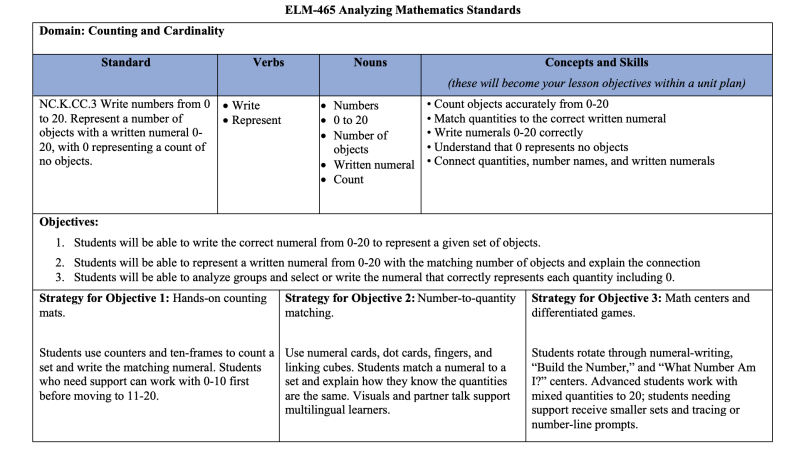
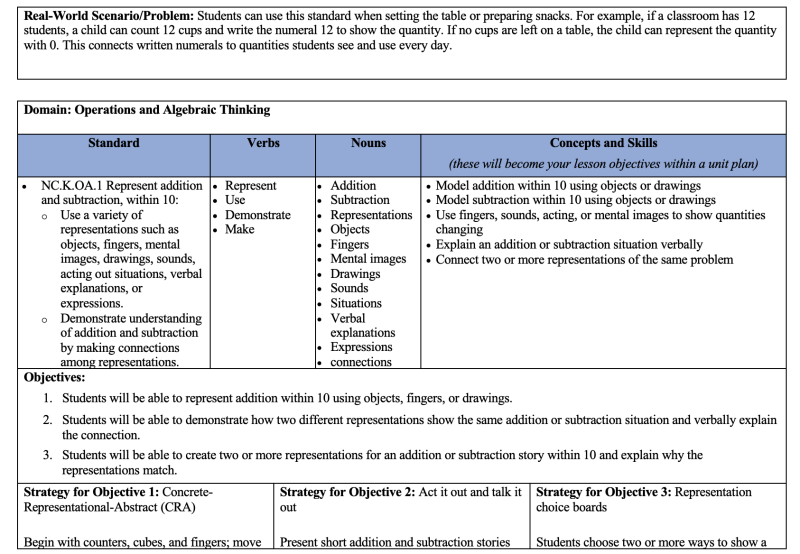
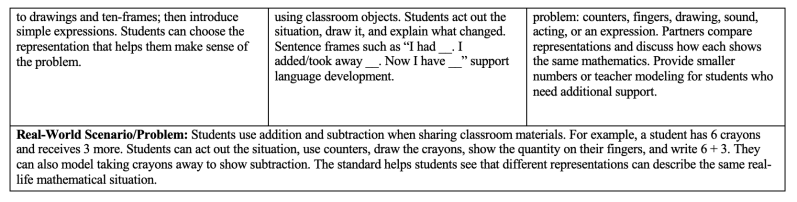
As a future elementary teacher, I want my mathematics classroom to be active, supportive, and engaging. I plan to use hands-on activities, visual representations, real-world examples, partner and small-group work, questioning, and mathematical discussions. I will also use student work, assessments, observations, and feedback to reflect on my instruction and determine what my students need next. As I continue through this course, I will add information about mathematics standards, instructional strategies, assessment, differentiation, and other effective teaching practices.
My Teaching Philosophy
My mathematics teaching philosophy is based on the belief that every student can learn math and should feel like they belong in the math classroom. I want my classroom to be a place where students feel comfortable asking questions, sharing their ideas, making mistakes, and trying again. I do not want students to think that math is just about memorizing formulas or following a certain set of steps to get the right answer. I want them to understand what they are doing, why they are doing it, and how math connects to things they see and experience in their everyday lives.
Math has always come pretty easily to me, and because of that, I have learned something important that I want to take with me into my own classroom. Just because a student understands something quickly does not mean they do not need to be challenged. At the same time, a student who needs more time to understand something should not feel like they are not good at math. My experience in 11th grade really showed me this. I could sometimes fall asleep in math class and still wake up and ace the test. I understood the material, but I was not always engaged or challenged. Looking back, I realize that I could have benefited from having opportunities to think deeper and push myself instead of just completing the work. Because of that experience, I want to make sure my students are actually thinking, asking questions, explaining their reasoning, and challenging themselves.
I also want to help my students develop a positive mathematical mindset. When a student says, "I can't do this," I want to help them understand that struggling with something does not mean they are not capable. Sometimes they just need more time, another strategy, or someone to encourage them. I want my students to feel comfortable saying, "I don't understand this yet," and then be willing to keep working. I will encourage productive struggle and remind students that mistakes are a normal part of learning. I want to focus my feedback on their thinking, effort, strategies, and progress instead of simply telling them they are "smart" or "good at math."


I know that every student is different, so I do not expect one teaching strategy to work for everyone. I want to use different ways of teaching math, including manipulatives, pictures, models, technology, math games, real-world examples, partner work, small groups, and class discussions. I also want students to have opportunities to explain how they solved a problem and hear how their classmates approached the same problem. I think students can learn a lot from realizing that there may be more than one way to solve a problem.
Reflection will also be an important part of my teaching. I want to take time to think about what worked, what did not work, and which students may need additional support or a different approach. I will use student work, assessments, observations, and conversations with students to help me make those decisions. I also know that I will not have everything figured out as a new teacher, and I am okay with that. I want to continue learning, asking questions, and improving my instruction so that I can better meet the needs of my students.
Ultimately, I want to be the kind of math teacher who helps students become confident in themselves as well as their math skills. I want my students to know that making a mistake does not mean they are bad at math and that struggling with a problem does not mean they cannot solve it. Most importantly, I want them to leave my classroom knowing that they are capable of doing mathematics and that they have a teacher who believes in them.
Strategies and Resources
Fraction Pizza Night: Build, Compare, and Share
Grade Level: 4th Grade
Fraction Pizza Night is an interactive, family-friendly math activity designed to help students develop a deeper understanding of fractions. Through hands-on challenges, students practice representing fractions, comparing fractions, and identifying equivalent fractions. Families can work together to solve problems, explain their reasoning, and connect fractions to real-life situations.
This resource encourages mathematical communication, problem-solving, and a growth mindset by allowing students to learn through exploration and collaboration.
Play the Game: https://padlet.com/rahshinakilpatrick/4th-grade-fraction-pizza-night-build-compare-and-share-s024t9165ijryinl4xmh
Community Resources
This section will be developed throughout the course as I identify community organizations, family supports, educational programs, and other resources that can support students and families in mathematics.
Blog
- Number Talk Blog
One important takeaway I learned from designing my Number Talk is that students need to understand that there is more than one way to solve a math problem. Every student learns differently, and some students may need more time to process a problem before sharing their thinking. As a teacher, I want to be patient and provide an environment where students feel safe making mistakes and learning from them. I also learned that listening to students explain their strategies can help me understand their strengths and identify misconceptions. Rather than immediately correcting an incorrect answer, I can ask questions that help students rethink their approaches and learn from the process. I want my students to understand that making mistakes is part of learning, not a reason to give up. By encouraging participation, celebrating effort, and allowing students to compare different strategies, I can help them build confidence in mathematics. My goal is to help students see themselves as capable mathematicians who can solve problems, explain their reasoning, and continue learning even when math feels challenging.
- Building a Mathematical Mindset Through Play
Developing an at-home fraction game reminded me that students need opportunities to make mistakes, try different strategies, and explain their reasoning. Games can make mathematics less intimidating because students can practice skills in a relaxed environment while learning from one another. I also learned that family engagement looks different for every household. Teachers should provide flexible activities that do not require expensive materials, constant internet access, or large amounts of free time. Simple directions, printable resources, and opportunities to play with different family members can make learning more accessible. My goal is to help students understand that mistakes are part of learning and that persistence can lead to success. A positive mathematical mindset develops when children feel supported, valued, and capable of solving problems.
Create Your Own Website With Webador